Engagement ring settings decide far more than style. The setting controls how much light reaches the diamond, how safe it is on a busy hand and how much care the ring will need over the next forty years. Two rings with identical diamonds can look and wear completely differently because of it.
Our engagement ring buying guide covers budget and metals. This article goes deeper on the five classic settings: claw, bezel, halo, pavé and three-stone. We compare each one honestly, including the downsides jewellers don’t always mention.
By the end, you should know which setting suits her style and, just as importantly, the way she lives.
What a setting actually does
The setting is the metal framework that holds the stone. In the UK, the small metal fingers that grip a diamond are usually called claws, while American guides call them prongs. The part under the stone is the gallery, the band is the shank and the sections either side of the centre are the shoulders.
A good setting does four jobs at once. First, it holds the stone securely, and second, it lets light in and out so the diamond can sparkle. Third, it sets the height of the ring above the finger, and finally it decides how a wedding band will sit beside it.
That is why choosing between engagement ring settings is really a choice about priorities. Maximum sparkle, maximum security and minimum upkeep rarely come in one design, so it helps to know which matters most to her.
How metal changes engagement ring settings
The metal you choose changes how a setting behaves over time. Platinum is dense and tends to move rather than wear away, so many jewellers like it for claws, even on a gold ring. White gold claws are slightly harder, but white gold can show a warmer tone with wear and may need refreshing to stay bright.
We work only in solid, hallmarked 9ct, 14ct and 18ct gold and 950 platinum, and our alloys are nickel-free. For a ring worn every day, 18ct gold or platinum claws are the sensible choice. You can compare the options in our guide to gold carats and platinum.
Claw (prong) settings: the classic for a reason
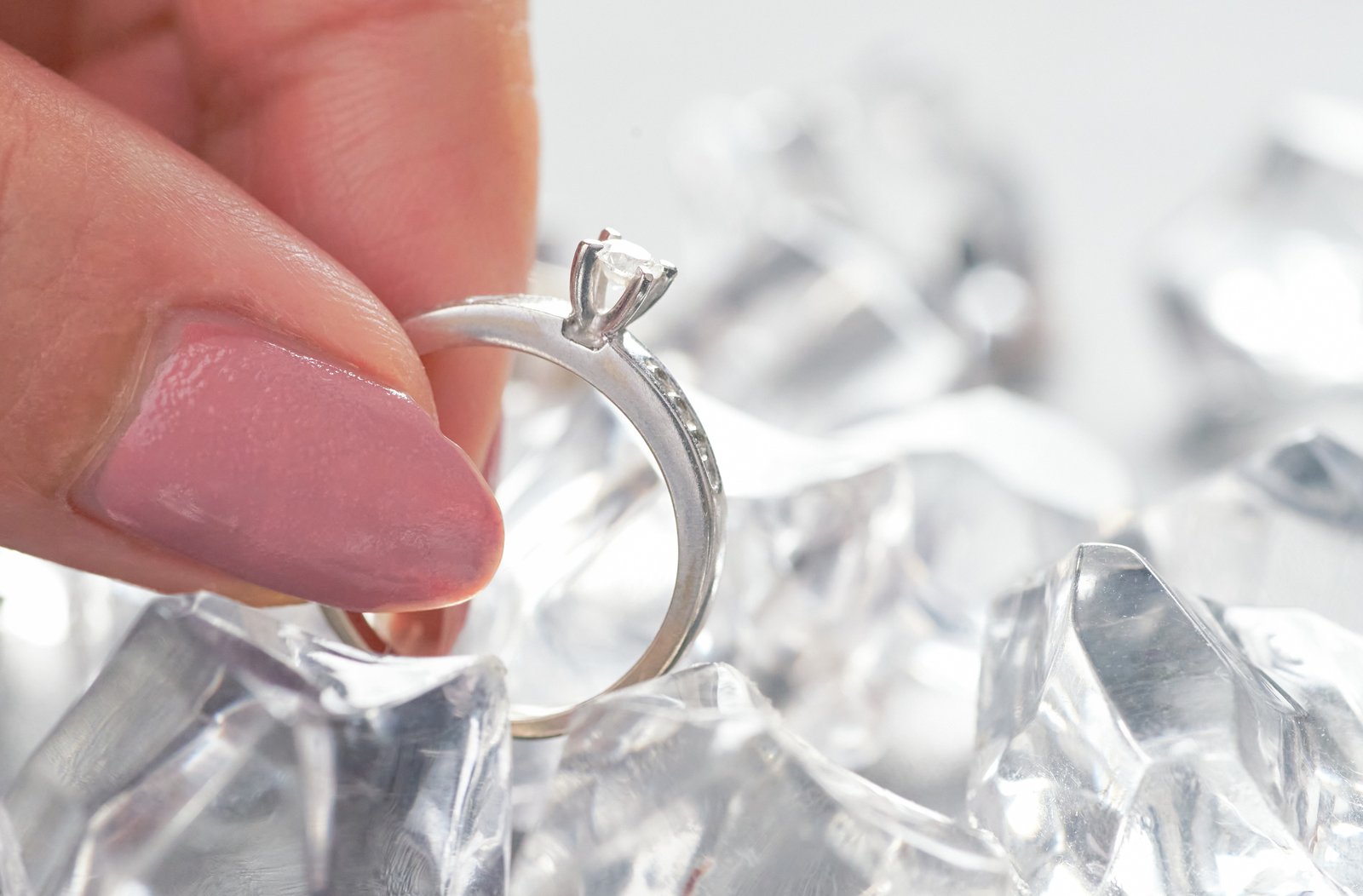
A claw setting holds the diamond with four or six slender metal claws. It is the most popular choice for solitaires, and for good reason. Very little metal surrounds the stone, so it shows the diamond at its largest and brightest.
Four claws show more of the diamond and give a squarer look from above. Six claws hold more securely and suit round stones, but they add a little more metal. For pointed shapes such as pear, marquise and princess, V-shaped claws protect the fragile tips.
The trade-off is maintenance. Claws can catch on jumpers and hair, and they wear thin over years of daily contact. A worn claw is the most common reason a diamond is lost, which is why we offer a complimentary clean and claw check once a year.
- Best for: solitaires, maximum light and a timeless look.
- Watch out for: snagging, worn tips and very high settings on active hands.
- Typical upkeep: a professional claw check every twelve months.
Bezel (rub-over) settings: the safest seat
A bezel setting wraps a thin rim of metal around the whole edge of the stone. A half bezel covers two sides and leaves the others open. Either way, the edge of the diamond, its most vulnerable point, is protected.
Bezels are the best friend of hands-on people. They don’t snag, they rarely need tightening and they suit surgeons, nurses, gardeners, climbers and anyone who works with their hands. They are also ideal for softer or more brittle stones, such as the emeralds and opals that dislike knocks.
There are compromises, however. The metal rim hides a sliver of the stone, so it can look very slightly smaller face-up. Also, a yellow gold bezel can reflect warmth into a white diamond, so many people choose platinum or white gold rims for colourless stones.
Halo settings: more sparkle, bigger presence
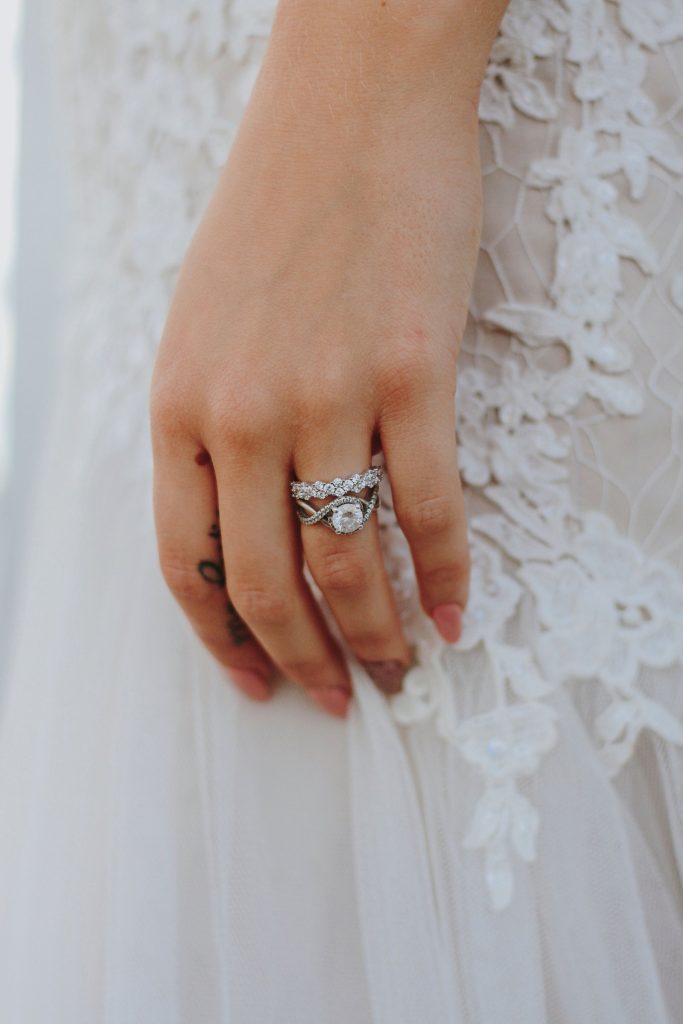
A halo surrounds the centre stone with a ring of small diamonds, usually set with tiny beads of metal. From a distance, the halo blends with the centre and makes it look noticeably larger. As a result, a halo can give the presence of a bigger stone for a smaller budget.
Halos can be round, follow the shape of the centre stone, or sit hidden beneath it as a “hidden halo”. The hidden version adds a flash of sparkle from the side while keeping a clean solitaire look from above.
That said, a halo means dozens of small stones to look after. It also widens the head of the ring, so a straight wedding band may not sit flush beside it. Plan the band at the same time, and expect to clean the ring a little more often.
Pavé settings: a band that sparkles
Pavé, from the French for “paved”, sets small diamonds close together along the band. Each stone is held by tiny beads raised from the metal. Micro-pavé uses even smaller stones and beads for a finer, almost continuous line of light.
Of all engagement ring settings, pavé adds the most sparkle along the hand, and it pairs beautifully with a solitaire or a halo. However, those tiny beads can wear or be knocked over time, and a stone can occasionally work loose. Pavé bands are also harder to resize, because cutting the band disturbs the stones.
If you choose pavé, ask how the small stones are graded and set. Our centre diamonds from 0.30ct carry an independent laboratory report, while smaller accent stones are graded by our in-house gemmologists. Every piece is finished by hand by experienced setters and polishers.

Three-stone settings: past, present and future
A three-stone or trilogy ring places a centre stone between two smaller side stones. It is often said to represent your past, present and future together. Visually, it gives a broad, generous presence across the finger.
Balance is everything. Most designs use side stones that are clearly smaller than the centre, commonly around a quarter to a half of its weight each. Side stones can be round, pear, tapered baguette or half-moon, or coloured gems such as sapphires for a personal twist.
Three-stone rings use more claws and sit wider on the hand. Therefore, they need the same yearly claw check as a solitaire, and the side stones should match the centre closely in colour. Otherwise, a warm side stone can make a bright centre look tired.
Approve the ring before any metal is cut
Every bespoke design is 3D-modelled so you can see the setting from every angle first. Call 0 7450 483 941 to book a private appointment in Hatton Garden or a video call.
Engagement ring settings side by side
Here is how the five engagement ring settings typically compare. The cost column shows a guide range for the setting alone, made in 18ct gold or platinum, excluding the centre stone.
| Setting | Security | Sparkle | Snag risk | Upkeep | Straight wedding band? | Typical setting cost |
|---|---|---|---|---|---|---|
| Four or six-claw solitaire | Good; six claws better | Excellent | Moderate | Yearly claw check | Usually sits well | £900–£2,000 |
| Bezel or half bezel | Excellent | Very good | Very low | Low | Yes | £1,000–£2,200 |
| Halo | Good | Exceptional | Moderate | Higher | Often needs a shaped band | £1,800–£4,000 |
| Pavé band with solitaire | Good if well set | Exceptional | Low | Higher | Depends on height | £1,500–£3,500 |
| Three-stone | Good | Excellent | Moderate to high | Moderate | Often needs a shaped band | £1,500–£4,500 incl. side stones |
These are guide prices only. Costs move with metal weight, stone sizes and design detail, so always ask for a written quotation before you commit.
Matching the setting to her life
The best setting is the one she forgets she is wearing until it catches the light. For that reason, start with her hands and her habits, then move on to style.
- Hands-on job, gym or sport: choose a bezel, a low-set six-claw or a low hidden halo.
- Loves maximum sparkle and presence: a halo, or a claw solitaire with a pavé band.
- Vintage or romantic taste: a three-stone, a milgrain-edged halo or an antique-style claw.
- Minimalist style: a slim four-claw solitaire or a clean bezel.
- Pointed stone shapes: V-claws or a bezel to protect the tips.
- Softer gems such as emerald or opal: a bezel or protective corner claws.
Height matters too. A high “cathedral” setting shows off the diamond but catches more often, while a low setting is more practical. However, a wedding band may then need shaping to fit around it.
Our guide to diamond shapes and the hand helps you match outline and finger.
Seeing engagement ring settings in Hatton Garden
Photos flatten settings. In the hand, you notice how high a ring sits, how a claw feels against a jumper and how a halo reads from across a room. That is why trying shapes on matters so much.
Hatton Garden has been the heart of London’s jewellery trade for generations, with setters and polishers working in the workshops above the street. Every bespoke design we make is 3D-modelled, so you approve the ring from every angle before any metal is cut.
If you are comparing engagement rings in Shoreditch or looking for engagement rings in Hoxton, Hatton Garden is only a short journey west. You can also see all the areas we serve, or explore the D-to-Z scale and shapes on our diamond chart. For an independent view of how settings are made, the Gemological Institute of America is an excellent reference.
Quick answers
Which engagement ring settings are the most secure?
Bezel settings are the most secure, because metal surrounds the whole edge of the stone. A six-claw setting is the most secure of the claw styles. Whatever you choose, a yearly claw check is the best insurance.
Does a halo make a diamond look bigger?
Yes, in most cases. From normal viewing distance, the small diamonds blend with the centre and increase its apparent size. Up close, you will still see the centre stone’s true outline.
Are four claws or six claws better?
Four claws show more of the diamond and look cleaner; six claws hold more securely. For larger stones or busy hands, six claws are the safer choice.
Which engagement ring settings need the least maintenance?
A bezel with a plain band needs the least care. Halos and pavé need the most, because they have many small stones held by tiny beads of metal.
Can I change the setting later?
Usually, yes. A centre diamond can be reset into a new design, and many people upgrade a setting for an anniversary. We can also reset inherited diamonds or remodel an existing ring.
Choosing engagement ring settings: the short version
Choose a claw setting for light, a bezel for security, a halo for presence, pavé for sparkle along the band and a three-stone for symbolism and width. Then match that choice to her hands, her work and the wedding band she will wear beside it.
Most of all, see settings in person before you decide. A ring that feels right on the finger is worth more than any photograph.
Design the setting around her
Bring a photo of her hand and the rings she already wears. Bespoke rings are delivered 4–6 weeks after you approve the design. Call 0 7450 483 941 or email hello@hattondiamond.co.uk.