Bespoke13 min readHatton Garden
Bespoke sounds expensive and slow. On Hatton Garden it is frequently neither — because the workshops are upstairs, the setters are along the corridor, and nothing has to be shipped anywhere.
Why bespoke is not a luxury here
In most of the country, a bespoke ring means a design sent away to a workshop in another city. On this street the whole supply chain lives inside two hundred metres: dealers upstairs, casters round the corner, setters and polishers along the corridor, the London Assay Office ten minutes’ walk away. That compresses the timeline from months to weeks and removes most of the margin that makes bespoke sound frightening.
In practice a made-to-order ring with a hand-picked stone frequently costs less than a comparable branded ring bought ready-made, because you are paying for materials and labour rather than a window on Bond Street.
Week one: the brief
The first conversation is about the wearer, not the ring. How do they dress? Do they wear yellow or white metal already? Do they work with their hands? Is there an heirloom in the family, and if so, does it need to be used, matched, or deliberately avoided?
Bring photographs of rings they have admired — and, just as usefully, ones they have dismissed. A single “too fussy” rules out more designs than an hour of description.
By the end of this meeting we should have four things fixed: shape, metal, approximate weight and budget. Everything after this is execution.
Week one to two: choosing the stone
We source against the brief and lay out three or four real stones, with reports, that meet it in different ways — one a little larger and lower in colour, one smaller and brighter, one an unusual ratio. Seeing them side by side under one lamp is the whole point of doing this in person, and it is where most people change their mind at least once.
If you have not read it yet, our guide to reading a grading report will make this hour considerably more useful. The diamond chart covers the grades themselves.
By appointment · Hatton Garden
Book the first conversation
No design, no deposit, no pressure — just half an hour working out what the ring needs to be. Most people leave with a clearer brief than they arrived with, whether or not they buy from us.
Week two: drawing and CAD
We draw by hand first, because a pencil argues back and a computer does not. Once the line is right it goes into 3D so you can see the ring from every angle, check the height of the setting against the hand, and see exactly how a wedding band will sit against it later.
This is the stage to be difficult. Changing a claw profile or the rise of a shoulder costs nothing on screen and a great deal in metal. We generally expect two rounds of revisions and are suspicious of a client who approves the first.
Week three: casting, setting, finishing
The approved model is grown in wax or resin and cast in your chosen metal. Then the work that actually decides whether a ring is good begins: filing, the cutting of seats for each stone, setting, and hand polishing.
Setting is the skill that separates workshops. A good setter cuts a seat so the stone sits level and the claws are even in height and thickness; a poor one relies on pressure and the stone tilts within a year. If you are commissioning anywhere on the street, ask who the setter is. The question is normal and the answer is revealing.
Week four to five: hallmarking and collection
Precious metal above the statutory exemption weights must be hallmarked before it can legally be described as gold or platinum in the UK. On Hatton Garden that means a walk to the London Assay Office and a few days. The mark is tiny, inside the shank, and it is the piece’s passport for the rest of its life.
At collection we check the fit, adjust if needed, and put it in the box you asked for rather than the box we happen to have.
Finding out the size without asking
The classic method still works: borrow a ring she wears on the correct finger and bring it in — we will size it in a minute. Failing that, a ring pressed into a bar of soap keeps the impression. Avoid string, which stretches, and avoid guessing from a photograph. And remember most designs can be resized afterwards — full eternity bands and channel settings being the exceptions, which is worth knowing before you fall in love with one.
What it costs, and where it varies
The mount is labour plus metal. A simple four-claw solitaire in 18ct gold is at the lower end; a platinum ring with hand-cut micro-pavé along the shoulders and a hidden halo can be several times that, because it is days rather than hours of work. The stone is quoted separately, which is how you should always want it quoted.
Design work and CAD are usually folded into the price of a commissioned piece rather than charged separately — ask, so there is no surprise.
Three things that go wrong, and how to avoid them
- Leaving it too late. Five weeks becomes eight in December and in the spring. Give a date at the first meeting.
- Designing for the photograph. High settings look spectacular and snag on everything. Ask what the ring will be like on the fortieth day, not the first.
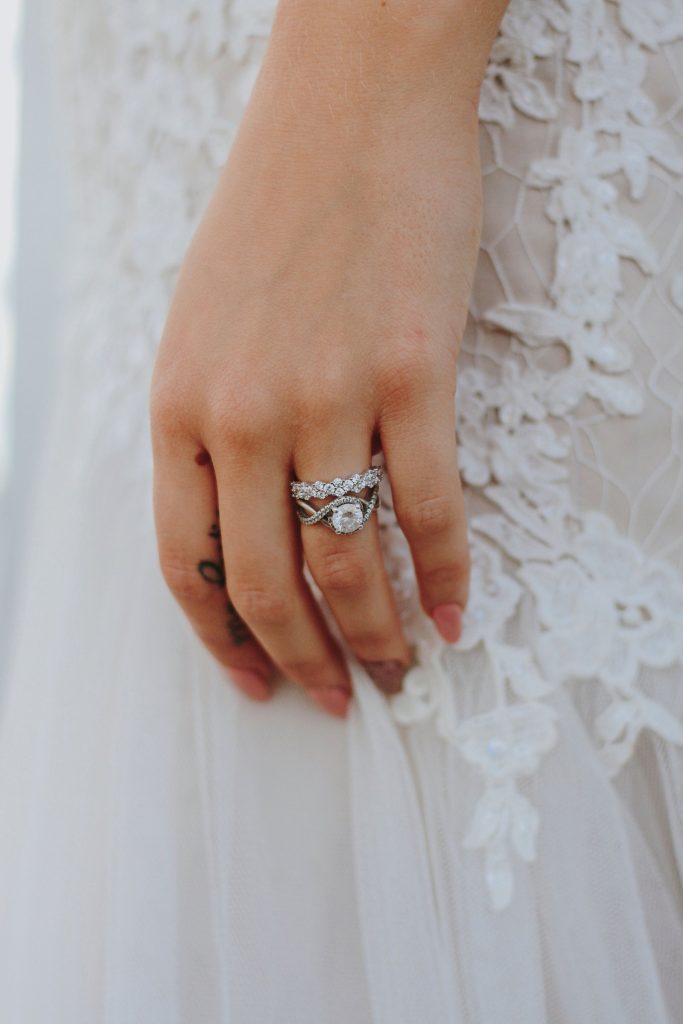
- Forgetting the wedding band. If the engagement ring has a curved or low-set profile, the band has to be shaped to fit it. Far easier to design both together, even if you only make one now.
By appointment · Hatton Garden
Five weeks from a conversation to a ring
Start with a brief, see real stones, approve a 3D model before any metal is cut, and collect a hallmarked ring made two hundred metres from where you are standing. That is what this street is for.
Written on Hatton Garden. Grading terminology follows GIA definitions; prices are indicative at the time of writing and move with the market. Nothing here is a valuation.