Diamond guide11 min readHatton Garden
Every jeweller on Hatton Garden will tell you the 4Cs matter. Very few will tell you which one to spend on when the budget runs out — so here is the order we would buy in, and what we would quietly sacrifice.
The 4Cs in one paragraph
Cut is how well a diamond has been shaped and polished, and it is the only C decided by a person rather than by geology. Colour runs from D, completely colourless, down to Z, light yellow. Clarity describes the tiny internal features every natural diamond carries, graded from Flawless to I3 under ten-times magnification. Carat is weight, not size: one carat is 0.2 grams, divided into a hundred points. You can see all four on our interactive diamond chart, which is the fastest way to understand what the letters actually look like.
Those are the definitions. The interesting question is what happens when you have £6,000 and four things to spend it on.
1. Cut, and it is not close
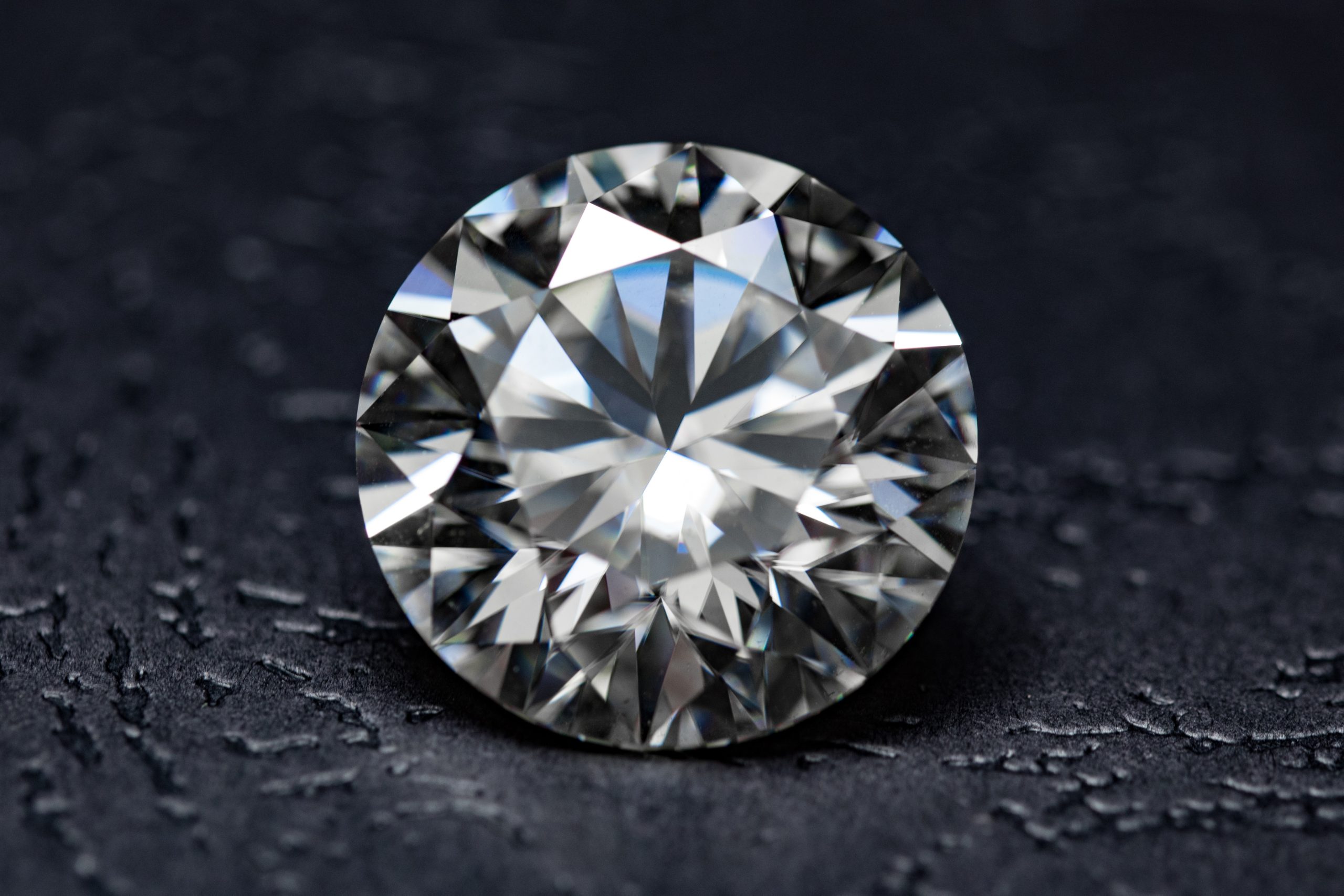
A diamond is a machine for handling light. Light enters through the table, bounces off the two pavilion walls, and comes back to your eye as brightness, fire and scintillation. Whether that happens depends almost entirely on angles — a pavilion cut a degree or two too shallow lets light fall straight out of the bottom of the stone, and one cut too deep leaks it out of the side.
Walk into any shop on this street and ask to see an Excellent-cut stone next to a Good-cut stone of the same weight, colour and clarity. The difference is not subtle. The shallow stone has a dull window through the middle; you can almost read print through it. The deep stone has a dark centre and faces up smaller than its weight suggests, which means you have paid for carats you cannot see.
Practical rule: never go below Very Good on a round brilliant, and treat Excellent as the default. On fancy shapes — ovals, pears, cushions — there is no single cut grade on most reports, so judge with your eyes: look for even brightness across the whole stone and no dark bow-tie stretching across the middle.
2. Clarity, but only to the point of eye-clean
Clarity is where the most money is wasted in London. Grades above VS2 describe features that a trained grader struggles to find at ten-times magnification. Nobody will ever look at your engagement ring through a loupe except a jeweller, and the jeweller already knows.
What matters is whether the stone is eye-clean: no inclusion visible to a normal person at normal reading distance in normal light. Most VS stones are. Many SI1 stones are. Some SI2 stones are, depending entirely on where the inclusion sits — an inclusion under the table is visible, the same inclusion hidden under a claw is not.
So the honest advice is: buy the lowest clarity grade that is still eye-clean for that particular stone, which means someone has to look at it. This is precisely the service a physical street of jewellers provides and a website cannot.
By appointment · Hatton Garden
Ask to see an SI1 and a VVS2 side by side
We will set them next to each other under daylight-balanced light and let you try to tell them apart. Most people cannot — and that is usually a four-figure discovery.
3. Colour, judged against the metal
Colour is graded face-down against master stones under controlled light — conditions you will never replicate. Face up, set, on a hand, in a restaurant, the D to F range and the G to J range are very hard to separate.
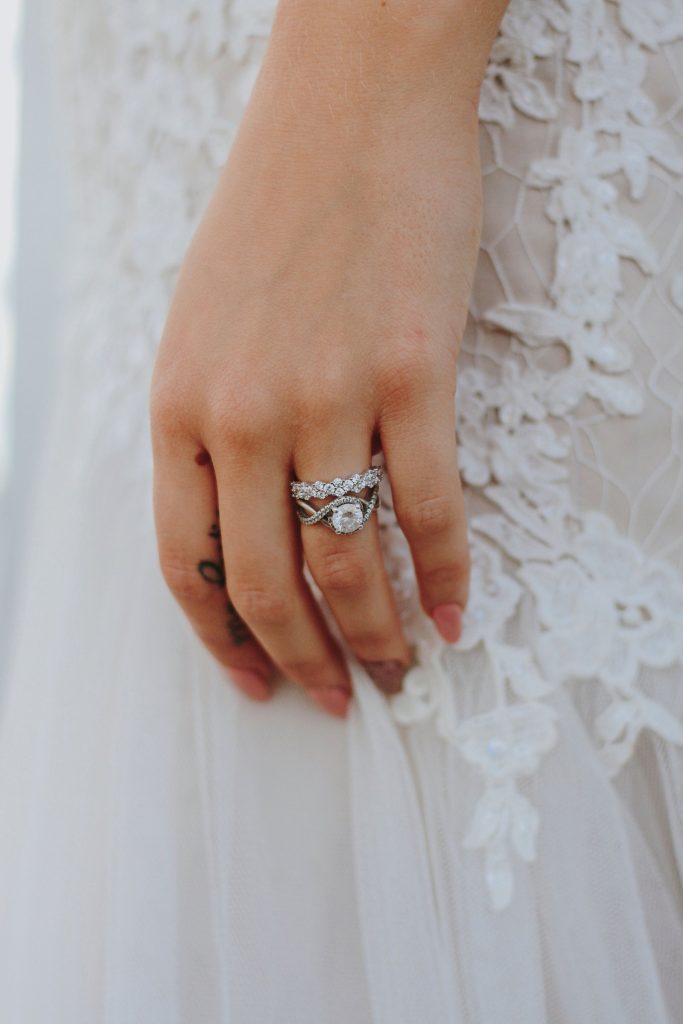
The decision that actually matters is the metal. A G or H stone in platinum or white gold reads as convincingly white. Below about J the warmth begins to show against cold metal. Put the same J or K stone in 18ct yellow or rose gold, however, and the warmth reads as intentional — the setting lends its colour to the stone and the whole piece looks richer for it.
| Setting metal | Sweet spot | Why |
|---|---|---|
| Platinum | G – H | Cold, grey-white metal shows warmth earliest |
| 18ct white gold | G – I | Rhodium plating is bright; re-plated every few years |
| 18ct yellow gold | I – K | Warm metal absorbs and flatters a warm stone |
| 18ct rose gold | I – L | The warmest setting; K faces up beautifully |
4. Carat, last and deliberately so
Carat is the easiest C to understand and the most expensive to chase, because price does not rise in a straight line. It steps — sharply — at the weights people ask for: half a carat, three quarters, and above all one carat.
A 0.90ct stone and a 1.00ct stone differ by about two tenths of a millimetre across the top. Nobody has ever noticed that on a hand. The price difference is frequently fifteen to twenty per cent. Buying just under a milestone is the single most reliable saving in the diamond trade, and every dealer on Hatton Garden knows it.
Remember too that weight hides. A deep-cut stone buries its carats in the pavilion where you cannot see them, so a well-cut 0.90ct can face up larger than a badly cut 1.05ct. Ask for the millimetre measurements, not just the weight — they are on every report.
How we would spend three budgets
Indicative only, for a round brilliant, centre stone alone, at the time of writing. Settings are extra.
| Budget | What we would buy | What we would give up |
|---|---|---|
| £3,000 | 0.50 – 0.60ct, Excellent cut, G–H, eye-clean SI1 | Clarity grade on paper; nobody will see it |
| £6,000 | 0.90 – 1.00ct, Excellent cut, H–I, SI1 hand-picked | The last colour grade, and the milestone weight |
| £12,000 | 1.30 – 1.50ct, Excellent cut, G, VS2 | Nothing much — this is where the 4Cs stop fighting |
The one-line version
Cut to Excellent, clarity down to the lowest eye-clean grade, colour matched to the metal, and carat just under the milestone. Do that and you will spend a third less than the couple standing next to you for a stone that looks the same or better on the hand.
What the 4Cs do not cover
Fluorescence, for one. A faint or medium blue fluorescence is often discounted and is invisible in almost all lighting; occasionally strong fluorescence makes a stone look milky in direct sun. Look at it outdoors before you decide.
Then there is the report itself — who issued it, and how recently. That deserves its own guide, and it has one: how to read a diamond grading report.
By appointment · Hatton Garden
Bring this guide with you
Book a private viewing and we will run through the four decisions above with real stones in front of you, at whatever budget you have set. There is no obligation and no upselling — the aim is that you can repeat the reasoning to someone else afterwards.
Written on Hatton Garden. Grading terminology follows GIA definitions; prices are indicative at the time of writing and move with the market. Nothing here is a valuation.